Meditation has gone from ancient Buddhist monasteries to Harvard Medical School to corporate boardrooms — and for good reason. With over 18,000 published studies in the past 30 years, mindfulness meditation has become one of the most rigorously examined psychological interventions in science. The results are far more grounded and nuanced than either the enthusiastic wellness industry or its skeptics would suggest. Here’s the honest picture.
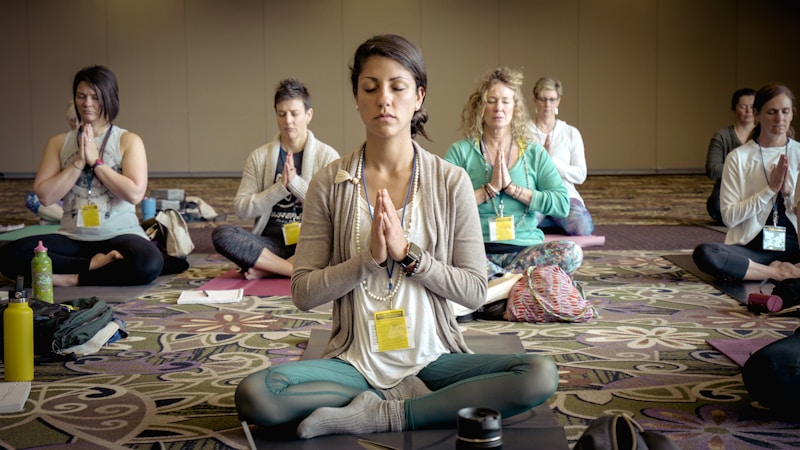
What Is Mindfulness Meditation?
Mindfulness, as defined by Jon Kabat-Zinn (who pioneered its clinical application in the West), is “paying attention in a particular way: on purpose, in the present moment, and non-judgmentally.”
Mindfulness-Based Stress Reduction (MBSR), developed by Kabat-Zinn at the University of Massachusetts Medical Center in 1979, is the most widely studied formal mindfulness program. It consists of:
- 8-week structured program
- Weekly 2.5-hour group sessions
- Daily home practice (45 min/day)
- One all-day silent retreat
Most research on mindfulness benefits derives from MBSR studies. But more recent evidence shows that even brief daily practice (10–20 minutes) produces meaningful benefits.
The Neuroscience: How Meditation Changes the Brain
One of the most remarkable findings of modern neuroscience is that the adult brain changes structurally in response to mental training — a property called neuroplasticity. Meditation is one of the most powerful inducers of neuroplasticity ever documented.
The Prefrontal Cortex (PFC)
The PFC is the brain’s “rational executive” — responsible for planning, decision-making, emotional regulation, and impulse control. Chronic stress and anxiety shrink the PFC, reducing its ability to regulate the emotional brain.
Long-term meditators show greater gray matter density in the PFC, particularly in areas associated with attention and meta-awareness. This structural change correlates with better emotional regulation, reduced reactivity, and greater cognitive flexibility.
The Amygdala: The Fear Center
The amygdala is the brain’s threat-detection hub. Overactive amygdala function is the neurological signature of anxiety, PTSD, and depression.
Studies consistently show that regular meditation reduces amygdala volume and reactivity. A landmark 2011 study from Sara Lazar’s lab at Massachusetts General Hospital found that after an 8-week MBSR program, amygdala gray matter density decreased — and this reduction correlated directly with reduced perceived stress.
The Default Mode Network (DMN) and Mind-Wandering
The Default Mode Network is the brain circuitry active when you’re not focused on a task — when you’re mind-wandering, ruminating, or thinking about the past and future. DMN hyperactivity is closely linked to unhappiness, depression, and anxiety.
A famous study by Harvard researchers found that people spend 47% of their waking hours not thinking about what they’re doing — and mind-wandering makes people unhappy, regardless of what activity they’re doing.
Experienced meditators show reduced DMN activity and connectivity during rest, indicating less default mind-wandering. When the DMN does activate, meditators show faster disengagement — they notice they’ve wandered off and return attention more quickly.
Hippocampus: Memory and Stress Resilience
The hippocampus is crucial for learning, memory, and stress regulation. Cortisol (the stress hormone) damages hippocampal neurons — chronic stress literally shrinks the hippocampus.
Regular meditation increases hippocampal gray matter density, which may explain meditators’ improved memory and emotional resilience under stress.
The Insula: Interoception and Empathy
Meditators show increased thickness in the insula cortex — a region involved in bodily awareness (interoception), empathy, and self-awareness. Greater insula thickness correlates with better emotional intelligence and more accurate body awareness.

What the Research Shows on Psychological Wellbeing
Anxiety and Depression
A 2014 meta-analysis in JAMA Internal Medicine, reviewing 47 RCTs, found that mindfulness meditation produces:
- Moderate effect size reduction in anxiety (comparable to antidepressant medications)
- Moderate effect size reduction in depression
- Small but significant reduction in pain
The key advantage of meditation over medication: no side effects, durable results, and increasing benefits over time.
Mindfulness-Based Cognitive Therapy (MBCT) — a depression-specific adaptation — reduces relapse rates in recurrent major depression by 43% in people who have had 3+ episodes, comparable to maintenance antidepressants.
Stress and Cortisol
MBSR consistently reduces perceived stress scores by 25–40% in clinical populations. More importantly, it reduces salivary cortisol — a direct physiological measure of the stress response. A 2013 study found MBSR reduced cortisol by 15% after 8 weeks.
Long-term meditators show a blunted cortisol response to stressors — they still notice stress, but their physiological response is smaller and they recover faster.
Chronic Pain
Mindfulness is now a first-line recommendation for chronic low back pain and fibromyalgia in major clinical guidelines. Mechanisms include:
- Altered pain perception: changing the relationship to pain, not the pain signal itself
- Reduced emotional amplification of pain (the “suffering” component)
- Increased pain tolerance via greater interoceptive awareness
- Modulation of descending pain pathways
Focus and Cognitive Performance
Brief mindfulness training (even a single 20-minute session) improves:
- Sustained attention and vigilance
- Working memory capacity
- Cognitive flexibility (switching between tasks)
- Reduced mind-wandering during cognitively demanding tasks
A 2013 study from researchers at the University of California found that 2 weeks of mindfulness training improved GRE reading comprehension scores and working memory capacity significantly.
Sleep
Mindfulness-Based Therapy for Insomnia (MBT-I) is highly effective:
- Reduces time to sleep onset by 20–30 minutes
- Reduces nighttime awakenings
- Improves sleep quality ratings
- Shows sustained benefits at 6-month follow-up — unlike sleep medications, which lose efficacy and create dependence
How to Start a Mindfulness Practice
Week 1–2: The Breath Anchor (5 minutes/day)
- Sit comfortably with your back upright (on a chair or cushion)
- Set a gentle timer for 5 minutes
- Close your eyes and bring attention to the physical sensation of breathing — the air entering your nostrils, the rise and fall of your chest or belly
- When your mind wanders (it will, every 10–20 seconds), simply notice this without judgment and return attention to the breath
- Repeat
The most important thing to understand: The value of meditation isn’t in maintaining perfect focus. It’s in the moment of noticing your mind has wandered and choosing to return. This act of noticing and redirecting is the mental equivalent of a bicep curl — each repetition strengthens the prefrontal cortex’s ability to regulate attention and emotion.
Week 3–4: Expanding to Body Scan (10 minutes/day)
- Lie down comfortably
- Systematically move attention through each body part, from toes to scalp
- Notice sensations — warmth, tension, tingling, numbness — without trying to change them
- This practice strengthens interoceptive awareness and activates the parasympathetic nervous system
Week 5–8: Open Awareness (15–20 minutes/day)
- Sit comfortably
- Instead of focusing on breath alone, open awareness to include all sensory experience: sounds, bodily sensations, emotions, thoughts
- Observe each arising experience as a temporary event, without identifying with it or trying to hold on or push away
- Practice seeing thoughts as “mental events” rather than facts or commands
Formal Practice Options
Apps (Evidence-supported):
- Headspace: Structured courses, backed by research
- Calm: Sleep-focused, breathing exercises
- Waking Up (Sam Harris): More philosophical, strong technique instruction
- Insight Timer: Free, enormous library, traditional teachers
MBSR: The gold standard. Find a certified 8-week in-person or online course at www.umassmed.edu/cfm.
Making It Stick: Habit Architecture
The most common reason people stop meditating is not lack of benefit — it’s lack of habit formation. Research on habit formation shows:
- Anchor to an existing habit: “After I pour my morning coffee, I meditate.” Identity-based cues work better than time-based ones.
- Start embarrassingly small: 5 minutes works. Perfection is the enemy of consistency.
- Don’t break the chain: The goal is daily continuity, not session length. A 3-minute session counts.
- Track it: Even a simple habit tracker app increases follow-through by 40%.
Common Misconceptions
“I can’t meditate because my mind is too busy.”
This is like saying you can’t go to the gym because your muscles are weak. A busy mind is exactly why you meditate. The goal is not an empty mind — it’s the practice of noticing and returning.
“I need to sit cross-legged on a cushion.”
Sit in a chair. The posture doesn’t matter as long as your back is upright enough to stay alert.
“It takes years to see benefits.”
Measurable cognitive improvements have been found after a single 20-minute session. Structural brain changes appear within 8 weeks of regular practice.
“Mindfulness is a religion.”
MBSR was explicitly designed to be secular. The neuroscience is completely religion-agnostic.
The Bottom Line
After 40 years of rigorous research, mindfulness meditation stands as one of the most evidence-based mental health interventions available. It rewires the brain, dampens the stress response, reduces anxiety and depression, improves sleep, sharpens attention, and builds emotional resilience — without side effects or financial cost.
The barrier is low. The science is strong. The question is simply whether you’ll spend 10 minutes a day training the most important organ in your body.
If you’re struggling with significant mental health challenges, meditation is a complement to — not a replacement for — professional psychological treatment.