Bodyweight Home Workout: Build Strength Without Equipment
The gym is not a requirement for getting fit. Your body is the most versatile piece of exercise equipment you’ll ever own – it’s always available, completely free, and travels with you everywhere. Bodyweight training has built incredible physiques for centuries, and it can do the same for you.
Why Bodyweight Training Works
Benefits Over Gym Equipment
- Functional strength: Trains movement patterns you use daily
- Joint-friendly: Natural movements with lower injury risk
- No equipment needed: Work out anywhere, anytime
- Progressive: Endless variations to increase difficulty
- Cost-effective: Zero gym membership required
The Science of Muscle Building
Research confirms that bodyweight exercises can build muscle as effectively as weight training when taken to near failure. A 2017 study in the Journal of Exercise Science & Fitness found that push-up training produced similar muscle gains to bench pressing.
Essential Bodyweight Exercises
Upper Body
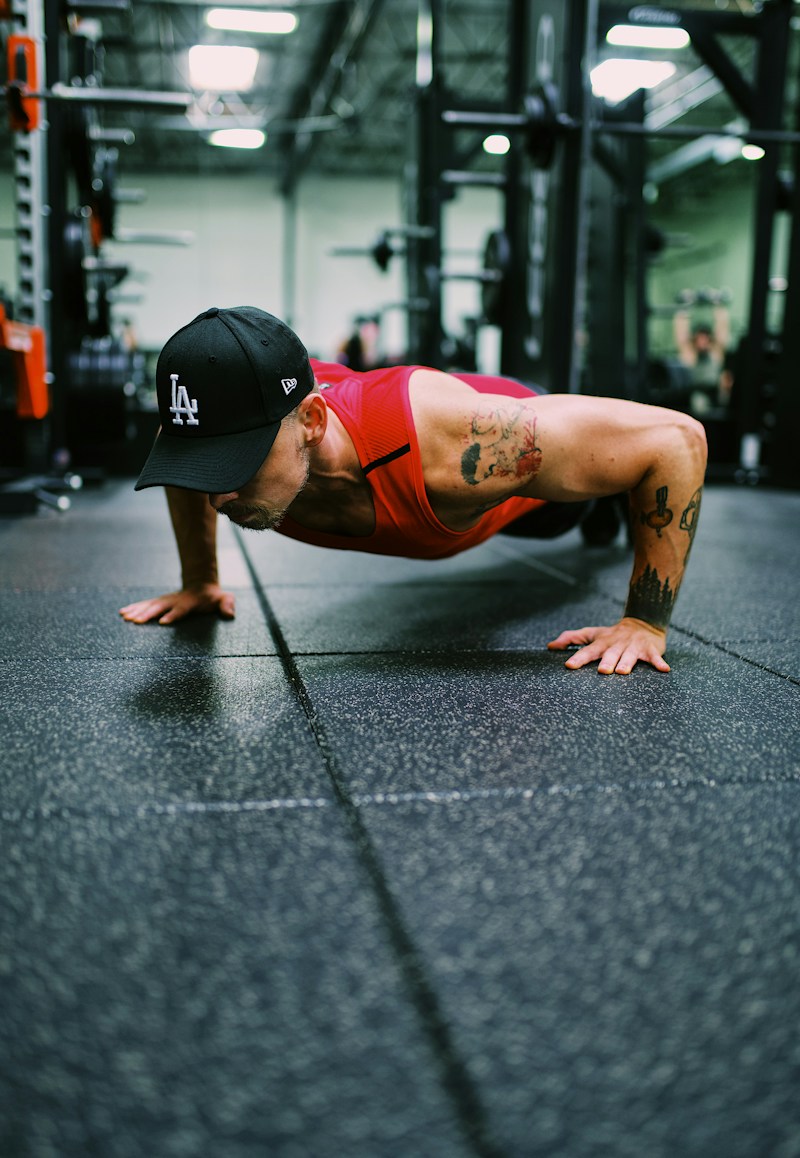
Push-Ups (Chest, Shoulders, Triceps)
The king of upper body exercises.
Standard Push-Up:
- Hands shoulder-width apart
- Body in a straight line
- Lower until chest nearly touches floor
- Push back up with control
Progressions:
- Knee push-ups (beginner)
- Standard push-ups (intermediate)
- Diamond push-ups (triceps focus)
- Archer push-ups (advanced)
- One-arm push-ups (elite)
Pull-Ups/Chin-Ups (Back, Biceps)
If you have a door frame bar, these are unmatched.
Can’t do a pull-up yet?
- Start with dead hangs (30 seconds)
- Negative pull-ups (lower slowly)
- Australian rows (feet on ground)
- Assisted pull-ups with band
Dips (Chest, Triceps, Shoulders)
Use two sturdy chairs or a countertop.
- Support your weight on extended arms
- Lower body by bending elbows to 90 degrees
- Press back up to starting position
Core
Plank Variations
Standard Plank: Hold a push-up position with straight arms or on forearms. Start with 30 seconds, build to 2 minutes.
Side Plank: Target obliques by supporting your body on one forearm.
Plank to Push-Up: Alternate between forearm and hand positions.
Hollow Body Hold
A gymnast’s secret weapon for core strength.
- Lie on back, arms overhead
- Lift legs and shoulders off ground
- Press lower back into floor
- Hold for 20-60 seconds
Mountain Climbers
Combine cardio with core work.
- Start in push-up position
- Drive knees to chest alternately
- Move explosively while maintaining form
Lower Body
Squats
The foundation of lower body strength.
Bodyweight Squat:
- Feet shoulder-width apart
- Sit back as if into a chair
- Thighs parallel or below
- Drive through heels to stand
Progressions:
- Box squats (beginner)
- Bodyweight squats (intermediate)
- Bulgarian split squats (advanced)
- Pistol squats (elite)
Lunges
Build single-leg strength and stability.
- Step forward into lunge
- Both knees at 90 degrees
- Push back to starting position
- Alternate legs
Glute Bridges
Essential for hip strength and posture.
- Lie on back, knees bent
- Drive hips toward ceiling
- Squeeze glutes at top
- Lower with control
Sample Workout Programs
Beginner Full Body (3x/week)
| Exercise | Sets | Reps |
|---|---|---|
| Knee Push-Ups | 3 | 8-12 |
| Bodyweight Squats | 3 | 12-15 |
| Glute Bridges | 3 | 15 |
| Plank | 3 | 20-30 sec |
| Lunges | 2 | 10/leg |
Rest 60-90 seconds between sets.
Intermediate Split
Day A - Push:
- Push-ups: 4 x 15
- Diamond push-ups: 3 x 10
- Pike push-ups: 3 x 10
- Dips: 3 x 12
Day B - Pull + Core:
- Pull-ups/rows: 4 x 8
- Chin-ups: 3 x 8
- Hollow body holds: 3 x 30 sec
- Mountain climbers: 3 x 30 sec
Day C - Legs:
- Bulgarian split squats: 4 x 10/leg
- Lunges: 3 x 12/leg
- Single-leg glute bridges: 3 x 12/leg
- Calf raises: 3 x 20
Advanced Full Body
- Archer push-ups: 4 x 8/side
- Pistol squat progressions: 4 x 5/leg
- Pull-ups: 4 x 12
- L-sit holds: 3 x 15 sec
- Handstand practice: 5 minutes
- Plyometric lunges: 3 x 10/leg
Progressive Overload Without Weights
The key to continued progress is progressive overload. Without weights, use these strategies:
1. Increase Reps
Add 1-2 reps each session until you hit 15-20.
2. Add Sets
Progress from 3 to 4 to 5 sets over time.
3. Slow Tempo
Use 4-second lowering phases to increase time under tension.
4. Pause Reps
Hold at the hardest point for 2-3 seconds.
5. Harder Variations
Move to more challenging exercise progressions.
6. Reduce Rest
Decrease rest periods from 90 to 60 to 45 seconds.
Common Mistakes to Avoid
- Ego lifting: Master basics before advancing
- Skipping legs: Lower body is half your muscles
- Poor form: Quality over quantity always
- No warm-up: 5 minutes of light movement first
- Inconsistency: 3x/week beats 7x one week then nothing
Equipment That Helps (Optional)
While not required, these affordable items expand your options:
- Pull-up bar ($20-30): Enables pull-ups and hanging exercises
- Resistance bands ($10-20): Assist or add resistance
- Parallettes ($30-40): Better push-up and L-sit positioning
- Ab wheel ($15): Intensify core training
Programming Tips
Frequency
Train each muscle group 2-3 times per week.
Volume
Start with 10-15 sets per muscle group weekly.
Recovery
Rest at least 48 hours before training the same muscles.
Progression
Track workouts and aim to improve something each session.
The Bottom Line
Bodyweight training is not a compromise – it’s a complete training system used by gymnasts, martial artists, and military personnel worldwide. With intelligent programming and progressive overload, you can build impressive strength and muscle using nothing but your own body.
Start with the basics, master them, then progress to harder variations. Consistency beats intensity. Show up three times a week, challenge yourself, and the results will follow.
Your gym is wherever you are. No excuses.
Consult with a healthcare provider before beginning any new exercise program, especially if you have existing health conditions.