Vector Databases in Production: A Practical Guide for 2026
on Ai, Vectordatabase, Rag, Mlops, Backend

Vector Databases in Production: A Practical Guide for 2026
Vector databases went from a niche research tool to a critical piece of production infrastructure in under three years. Every RAG pipeline, semantic search system, and recommendation engine now depends on one. Yet most teams pick a vector store the same way they pick a JavaScript library — by checking GitHub stars and blog posts, then regretting it six months later.
This guide is for engineers who need to make a real choice and operate it under real load.
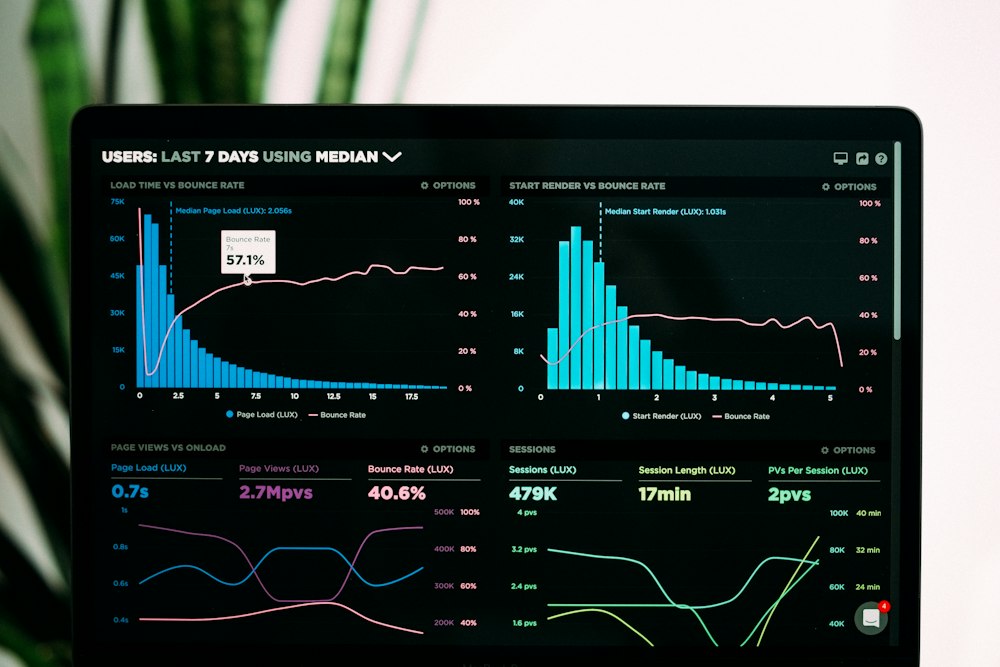
Photo by Carlos Muza on Unsplash
What a Vector Database Actually Does
At its core, a vector database stores high-dimensional float arrays (embeddings) and answers one question extremely fast: “Given this query vector, which stored vectors are most similar?”
That question is called Approximate Nearest Neighbor (ANN) search. “Approximate” is doing real work in that phrase — exact nearest neighbor search doesn’t scale beyond a few million vectors without heroic hardware. ANN trades a small recall penalty for massive throughput gains.
The similarity metric matters:
- Cosine similarity — angle between vectors; best for text embeddings (OpenAI, Cohere, etc.)
- Euclidean (L2) distance — absolute spatial distance; common in image embeddings
- Dot product (IP) — fast but sensitive to vector magnitude; used in some retrieval models
Most modern stores support all three. Choose based on your embedding model’s recommendation, not personal preference.
The 2026 Landscape
The market has consolidated but remains genuinely fragmented:
| Store | Best For | Notes |
|---|---|---|
| Pinecone | Managed, no-ops | Serverless tier changed the economics |
| Weaviate | Hybrid search + GraphQL API | Strong multimodal story |
| Qdrant | Rust performance, self-hosted | Best raw throughput in benchmarks |
| Milvus/Zilliz | Billion-scale workloads | Complex but powerful |
| pgvector | Already on Postgres | Good enough for <10M vectors |
| Chroma | Local dev / prototyping | Don’t use in production |
| OpenSearch / Elasticsearch | Existing ES clusters | kNN plugin is now production-grade |
The “use pgvector” answer has become correct for far more teams than it was two years ago. If you already run Postgres and your vector count stays under 10 million, pgvector with HNSW indexes is seriously competitive.
Index Types: HNSW vs. IVF vs. DiskANN
Every vector database uses one (or more) of these index structures:
HNSW (Hierarchical Navigable Small World)
The current gold standard for in-memory ANN. Build a multi-layer graph where each node connects to its nearest neighbors. At query time, traverse from coarse upper layers to fine lower layers.
Pros: Excellent recall (>95% at 10x speedup), good for incremental updates
Cons: Memory-hungry — roughly 100 bytes per vector for the graph overhead
# Qdrant HNSW config example
client.create_collection(
    collection_name="docs",
    vectors_config=VectorParams(
        size=1536,  # OpenAI ada-002 dimensions
        distance=Distance.COSINE,
    ),
    hnsw_config=HnswConfigDiff(
        m=16,            # Connections per node (higher = better recall, more memory)
        ef_construct=100 # Build-time search depth (higher = better quality index)
    )
)
IVF (Inverted File Index)
Clusters vectors into Voronoi cells. At query time, search only the nearest nprobe clusters.
Pros: Lower memory than HNSW, works well for billion-scale with quantization
Cons: Recall drops with few probes; requires periodic retraining as data grows
DiskANN
Microsoft Research’s algorithm for when your index doesn’t fit in RAM. Stores most data on SSD with a small in-memory cache.
Pros: Sub-second queries on billion-vector datasets with modest RAM
Cons: I/O latency variance, more complex tuning
Rule of thumb: Use HNSW if your vectors fit in RAM. Move to IVF+PQ or DiskANN when they don’t.
Metadata Filtering: The Hidden Performance Trap
Vector databases aren’t just vector stores — you almost always filter by metadata simultaneously. “Find the 10 most similar documents written after 2025 in English for user_id=42.”
This is where many teams hit unexpected pain. Filtering strategies:
Pre-filter (filter before ANN)
Reduce the candidate set first, then do ANN on the subset. Correct results, but devastatingly slow for selective filters on large datasets — you end up doing brute-force search on a small slice.
Post-filter (filter after ANN)
Do ANN first, then discard results that don’t match filters. Fast, but you might discard all top-k results and return nothing useful.
In-graph filtering (Weaviate, Qdrant)
The right answer for most production workloads. The HNSW traversal respects filters, exploring more neighbors when filtered candidates are sparse. More complex to implement but correct and fast.
# Qdrant filtered search — uses in-graph filtering
results = client.search(
    collection_name="docs",
    query_vector=query_embedding,
    query_filter=Filter(
        must=[
            FieldCondition(key="language", match=MatchValue(value="en")),
            FieldCondition(key="user_id", match=MatchValue(value=42)),
        ]
    ),
    limit=10,
)
Quantization: Shrinking Your Index
If your 1536-dimension float32 embeddings are eating your RAM budget, quantization helps:
- Scalar Quantization (SQ8): Compress float32 → int8. ~4x size reduction, ~1-2% recall loss. Almost always worth it.
- Product Quantization (PQ): Segment vector into subspaces, quantize each. ~32x smaller, 5-10% recall loss. Needs re-ranking.
- Binary Quantization (BQ): Extreme compression, works surprisingly well for some embedding models. Requires oversampling + re-rank.
OpenAI’s text-embedding-3-large with binary quantization + re-ranking can match text-embedding-ada-002 quality at 1/32 the storage. This is a legitimate production optimization.
Hybrid Search: Combining Dense + Sparse
Pure semantic search misses exact keyword matches. “What is the CVE number for Log4Shell?” — you want CVE-2021-44228, not a semantically similar but wrong CVE.
Hybrid search combines:
- Dense retrieval — vector similarity (semantic understanding)
- Sparse retrieval — BM25/TF-IDF (keyword precision)
Fusion strategies:
- Reciprocal Rank Fusion (RRF): Simple, robust, often good enough
- Learned sparse models (SPLADE, BGE-M3): Better than BM25 but heavier
# Weaviate hybrid search
result = client.query.get("Document", ["content", "title"]) \
    .with_hybrid(query="Log4Shell CVE", alpha=0.5) \
    .with_limit(10) \
    .do()
alpha=0.5 blends dense and sparse 50/50. Tune based on your query distribution.
Operational Concerns
Backups
Vector indexes are notoriously annoying to back up. HNSW graphs can’t be reconstructed from just the raw vectors without reindexing (which takes hours). Always back up both raw vectors and the index snapshot if your store supports it.
Consistency Models
Most vector databases are eventually consistent by design. Newly inserted vectors may not be immediately searchable. For user-facing writes, either:
- Accept the lag and show stale results briefly
- Use a write-through cache to the source-of-truth and re-query after confirmation
- Use Qdrant’s
wait=trueflag (consistency at cost of latency)
Dimensionality Changes
Changing embedding models (e.g., upgrading from ada-002 to text-embedding-3-large) requires complete reindexing. Plan for this. Maintain a version field on vectors, and consider blue/green collection deployments for zero-downtime migrations.
Choosing for Your Scale
| Vectors | Recommendation |
|---|---|
| < 1M | pgvector with HNSW. Seriously. |
| 1M – 50M | Qdrant or Weaviate self-hosted, or Pinecone serverless |
| 50M – 1B | Milvus with IVF+SQ8, or Zilliz Cloud |
| > 1B | Milvus + DiskANN, or custom infra |
Final Thoughts
Vector databases are not magic. They’re specialized indexes with real trade-offs around memory, recall, latency, and operational complexity. The teams that succeed with them treat vector search like any other database: they benchmark their actual queries, monitor recall degradation over time, and plan migrations before they’re urgent.
Start simple. pgvector handles more than most people expect. Graduate to dedicated stores when you have specific evidence that you need to.
The embedding model you choose matters more than the vector database. A better model with pgvector beats a mediocre model with Pinecone every time.
이 글이 도움이 되셨다면 공감 및 광고 클릭을 부탁드립니다 :)