The Modern React Stack in 2026: Server Components, Suspense, and the Server-First Shift
on React, Frontend, Nextjs, Javascript, Webdev

The Modern React Stack in 2026: Server Components, Suspense, and the Server-First Shift
React has been the dominant UI framework for a decade. But React in 2026 is meaningfully different from React in 2021. The mental model has shifted — from “components are JavaScript functions that render HTML” to “components can run on the server or the client, and the boundary between them is the architecture.”
That’s a bigger conceptual leap than it sounds. And a lot of teams are still working through it.
This post is about what the production React stack looks like in 2026, what’s actually better, and what complexity has been introduced in exchange.
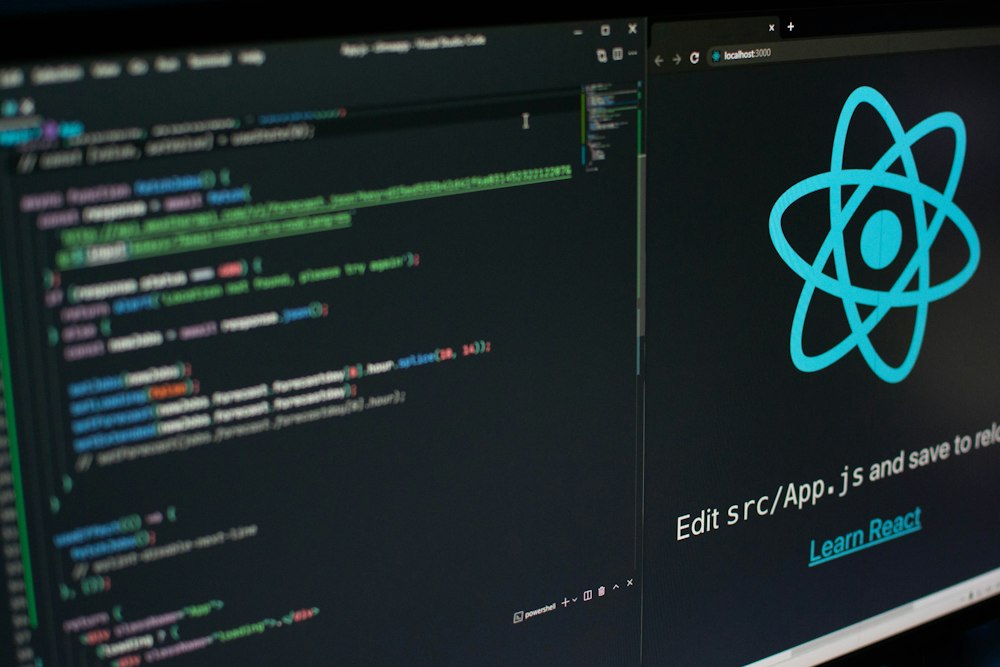
The Server-First Mental Model
React Server Components (RSC) are the foundation of the modern React mental model. The key insight is deceptively simple:
Not all components need to run in the browser.
Components that just render data — query the database, format the result, produce HTML — don’t need to ship JavaScript to the client. They can run on the server at request time, produce HTML, and be done.
// This is a Server Component (no "use client" directive)
// It runs on the server — no JS shipped to the browser
async function ProductPage({ id }: { id: string }) {
  // Direct database access — no API layer needed
  const product = await db.products.findUnique({ where: { id } });

  if (!product) notFound();

  return (
    <div>
      <h1>{product.name}</h1>
      <p>{product.description}</p>
      {/* Client components can be nested inside server components */}
      <AddToCartButton productId={product.id} price={product.price} />
    </div>
  );
}

// This is a Client Component (has interactivity)
"use client";
function AddToCartButton({ productId, price }: Props) {
  const [added, setAdded] = useState(false);

  return (
    <button onClick={() => {
      addToCart(productId);
      setAdded(true);
    }}>
      {added ? "Added!" : `Add to Cart — $${price}`}
    </button>
  );
}
The server component runs on the server, queries the database directly, and produces the HTML for the product details. The client component — small, focused on interactivity — is the only thing that ships JavaScript to the browser.
Next.js App Router: The Production Standard
The React ecosystem has consolidated significantly around Next.js App Router as the production standard for server-first React applications. It’s not the only option (Remix/React Router v7 and TanStack Start are strong alternatives), but it has the widest adoption and best ecosystem support.
App Router vs Pages Router
If you’re starting a new project in 2026, use App Router. The Pages Router is in maintenance mode — it still works and will be supported, but new features land in App Router only.
Directory structure in App Router:
app/
├── layout.tsx          # Root layout (server component)
├── page.tsx            # Home page (server component)
├── loading.tsx         # Suspense fallback for this route
├── error.tsx           # Error boundary for this route
├── (auth)/
│   ├── login/
│   │   └── page.tsx
│   └── register/
│       └── page.tsx
└── products/
    ├── page.tsx        # Product listing
    └── [id]/
        └── page.tsx    # Product detail
Data Fetching in 2026
The getServerSideProps / getStaticProps pattern from Pages Router is replaced by direct async functions in server components:
// No more getServerSideProps — just async/await in the component
export default async function ProductsPage() {
  const products = await fetchProducts(); // runs on server

  return (
    <div>
      {products.map(product => (
        <ProductCard key={product.id} product={product} />
      ))}
    </div>
  );
}

// Parallel data fetching (both requests fire simultaneously)
export default async function DashboardPage() {
  const [user, stats, notifications] = await Promise.all([
    fetchUser(),
    fetchStats(),
    fetchNotifications()
  ]);

  return <Dashboard user={user} stats={stats} notifications={notifications} />;
}
Suspense and Streaming: The UX Impact
Streaming HTML is one of the most impactful performance wins in modern React, and it’s often underexplained.
Traditional SSR: the server generates the entire HTML before sending anything to the browser. If one data fetch takes 500ms, the user sees nothing for 500ms.
Streaming with Suspense: the server sends HTML progressively. Fast parts render immediately; slow parts stream in as they complete.
export default function ProductPage({ params }) {
  return (
    <div>
      {/* This renders immediately — no data needed */}
      <ProductHeader />

      {/* This streams in when reviews load */}
      <Suspense fallback={<ReviewsSkeleton />}>
        <ProductReviews productId={params.id} />
      </Suspense>

      {/* This streams in when recommendations load */}
      <Suspense fallback={<RecommendationsSkeleton />}>
        <RelatedProducts productId={params.id} />
      </Suspense>
    </div>
  );
}
The user sees the product header instantly. Reviews and recommendations pop in as their data arrives. No client-side loading state management required.
State Management in 2026
The state management landscape has consolidated. The big shift: server state and client state are now different problems with different tools.
Server State: React Query / TanStack Query
For data that lives on the server — API responses, database records — TanStack Query remains the dominant choice. Its caching, background refetching, and invalidation model is well-understood and battle-tested.
"use client";
import { useQuery, useMutation, useQueryClient } from "@tanstack/react-query";

function TodoList() {
  const queryClient = useQueryClient();

  const { data: todos } = useQuery({
    queryKey: ["todos"],
    queryFn: fetchTodos,
  });

  const addTodo = useMutation({
    mutationFn: createTodo,
    onSuccess: () => {
      queryClient.invalidateQueries({ queryKey: ["todos"] });
    },
  });

  return (/* ... */);
}
Note: with App Router and Server Actions, you can often bypass client-side data fetching entirely for simple mutations. But TanStack Query is still the right tool when you need optimistic updates, complex cache management, or real-time synchronization.
Client State: Zustand or Jotai
For UI state that genuinely lives on the client — modals open/closed, filter selections, multi-step form state — Zustand and Jotai have displaced Redux for most new projects.
Zustand for shared state with a simple store:
import { create } from "zustand";

const useCartStore = create<CartState>((set) => ({
  items: [],
  addItem: (item) => set((state) => ({
    items: [...state.items, item]
  })),
  removeItem: (id) => set((state) => ({
    items: state.items.filter(item => item.id !== id)
  })),
}));
Jotai for atomic, composable state:
import { atom, useAtom } from "jotai";

const cartAtom = atom<CartItem[]>([]);
const cartCountAtom = atom((get) => get(cartAtom).length);
Server Actions: Mutations Without APIs
Server Actions are one of the genuinely new patterns that React 19 / Next.js App Router introduced. They allow you to call server-side functions directly from client components, without writing API routes.
// actions.ts (server-side function)
"use server";
export async function addToCart(productId: string) {
  const session = await getSession();
  await db.cartItems.create({
    data: {
      userId: session.userId,
      productId,
    }
  });
  revalidatePath("/cart");
}

// Client component — calls the server action directly
"use client";
import { addToCart } from "./actions";

function AddToCartButton({ productId }: Props) {
  return (
    <form action={async () => await addToCart(productId)}>
      <button type="submit">Add to Cart</button>
    </form>
  );
}
No API route, no fetch, no JSON parsing. The form submission calls the server function directly. This works even with JavaScript disabled (progressive enhancement).
TypeScript: Non-Negotiable
TypeScript is table stakes for serious React projects in 2026. End-to-end type safety from database schema to UI component is achievable with the right stack:
Prisma (DB schema → TypeScript types)
    ↓
tRPC or typed Server Actions (type-safe API layer)
    ↓
React components (typed props)
// Prisma schema drives the TypeScript types
const product = await prisma.product.findUnique({
  where: { id },
  select: {
    id: true,
    name: true,
    price: true,
  }
});
// product is typed as: { id: string; name: string; price: number } | null
The Stack in 2026: A Reference
For a greenfield production React app:
| Layer | Choice | Notes |
|---|---|---|
| Framework | Next.js 15 App Router | Widest ecosystem, strong defaults |
| Language | TypeScript | Required for serious work |
| Styling | Tailwind CSS | Dominant choice; CSS Modules for component libraries |
| Components | shadcn/ui | Copy-paste components, Tailwind-based |
| Server State | TanStack Query | When client-side caching needed |
| Client State | Zustand | Simple; scales well |
| Forms | React Hook Form + Zod | Validation + type safety |
| ORM | Prisma or Drizzle | Prisma for flexibility, Drizzle for performance |
| Auth | Auth.js (NextAuth v5) | Covers most OAuth + credential flows |
| Testing | Vitest + React Testing Library | Fast, good DX |
| Deployment | Vercel (easy) or self-hosted | Next.js deploys best on Vercel |

Honest Caveats
The App Router / RSC mental model is powerful but genuinely complex. Common pain points:
- “use client” boundary confusion: New developers frequently add
"use client"too liberally, defeating the server component benefits. - Caching behavior is subtle: Next.js App Router’s multi-layer caching (fetch cache, router cache, full route cache) surprises even experienced developers.
- Hydration mismatches: Server-rendered HTML that doesn’t match client hydration causes hard-to-debug errors.
- Testing server components: The testing story is still maturing. Testing client components with React Testing Library is well-established; testing server components is not.
These are solvable problems — but they’re real, and you’ll encounter them.
Conclusion
The modern React stack in 2026 is more powerful than ever — and meaningfully more complex than it was three years ago. The server-first model, streaming SSR, and Server Actions represent a genuine architectural evolution, not just API churn.
Teams that have internalized the new mental model — clear server/client boundaries, progressive enhancement by default, end-to-end type safety — are building faster and shipping more reliable applications.
Teams still fighting the framework are usually confused about why these patterns exist. The “why” — ship less JavaScript, access data directly, make UIs fast by default — is worth understanding before the “how.”
이 글이 도움이 되셨다면 공감 및 광고 클릭을 부탁드립니다 :)
